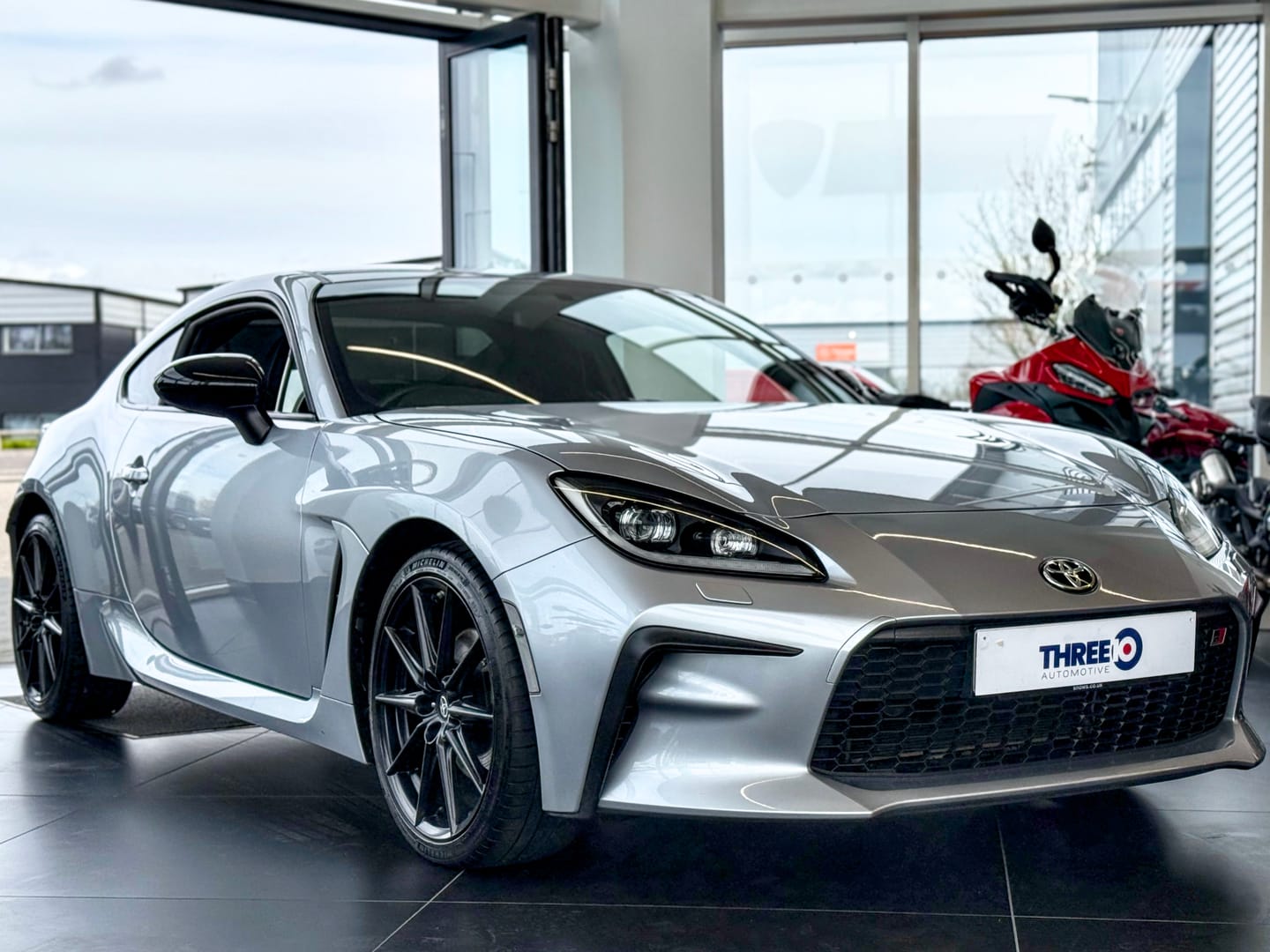
There is a moment, on a B-road on a Sunday morning, when the small Toyota stops being a thing you operate and starts being a thing you wear.
I took our GR86 home for the weekend. I have driven a great many manual cars in the last twenty-five years. I had forgotten what the good ones felt like.
The GR86 is a small naturally-aspirated coupe with a 2.4-litre four-cylinder boxer engine, a six-speed manual gearbox, a limited-slip differential, and not very much else. It has no turbo. It has no hybrid system. The infotainment screen is small. The driver's seat is firm. The doors close with the quiet plastic thock of a Toyota.
What the manual asks of you
A car with a manual gearbox makes a small social contract with its driver. The contract is: I will give you control of when I shift, and what gear I am in. In exchange, you will pay attention. You have to know where the engine is in its rev range. You have to anticipate the corner before you arrive at it. You have to read the road for what is two beats ahead of you, not one.
Modern automatics are excellent. They are quicker, smoother, more efficient. They are also a tiny renunciation: you may put your attention elsewhere. The phone. The conversation. The screen.
A manual gearbox in a car that is light and predictable and a little under-tyred — like the GR86 — gives you back the part of driving that is talking to the road through your hands and feet. The Battle of Britain pilots used a phrase, seat of the pants. It is the only flying that matters, they said. The same is true of driving, on the right road, in the right car, on the right morning.
We are not going to claim the GR86 is the only such car we sell. The Z4 sDrive 20i, on a back road with the roof down, asks similar things. The 992 GT3 we held last summer asked even more. But the GR86 is the cheapest car at the hangar at which the old vocabulary still applies, and at £30,677 it is the cheapest one I'd recommend if you want to understand the conversation.